

Shortcuts to the project
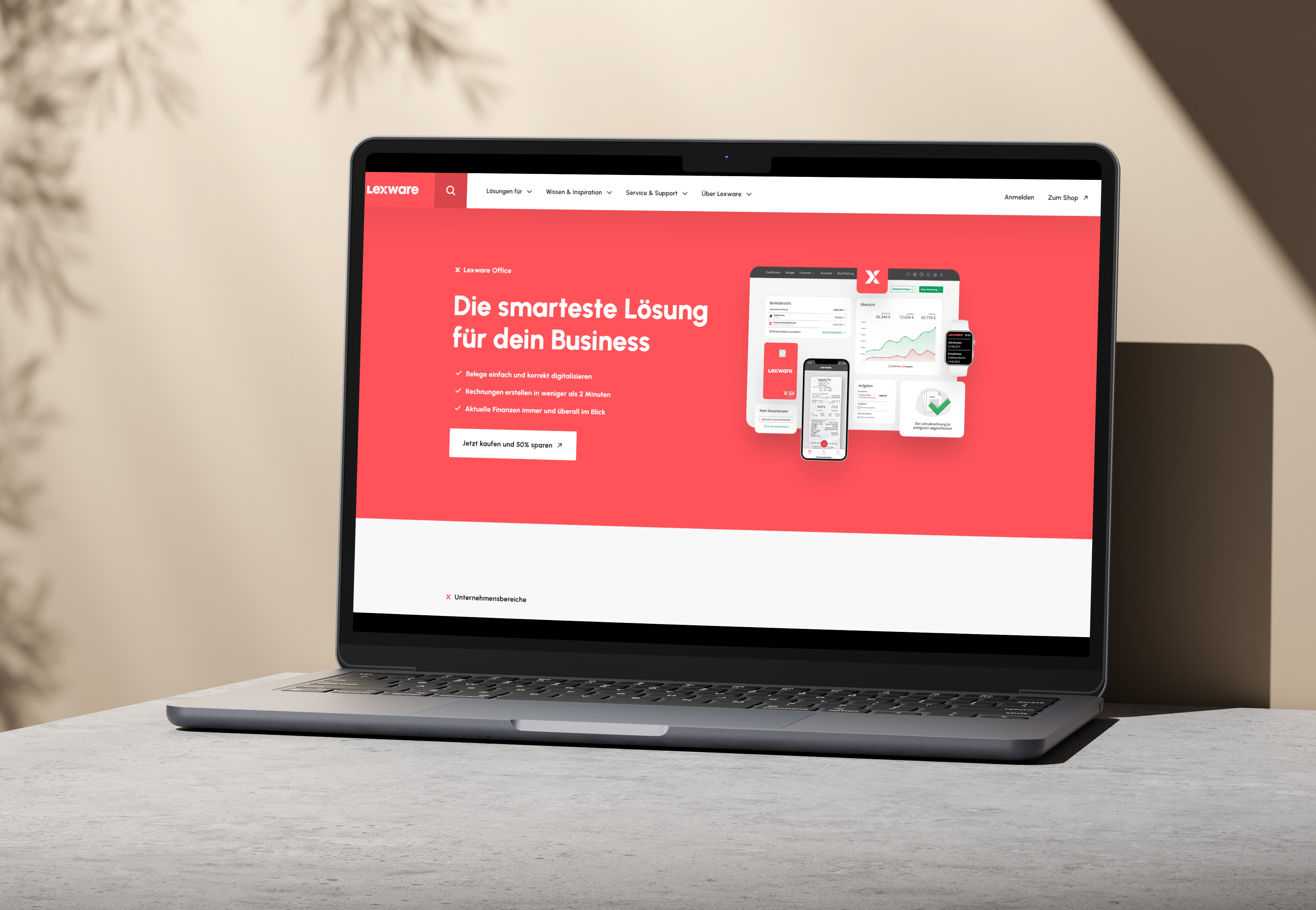
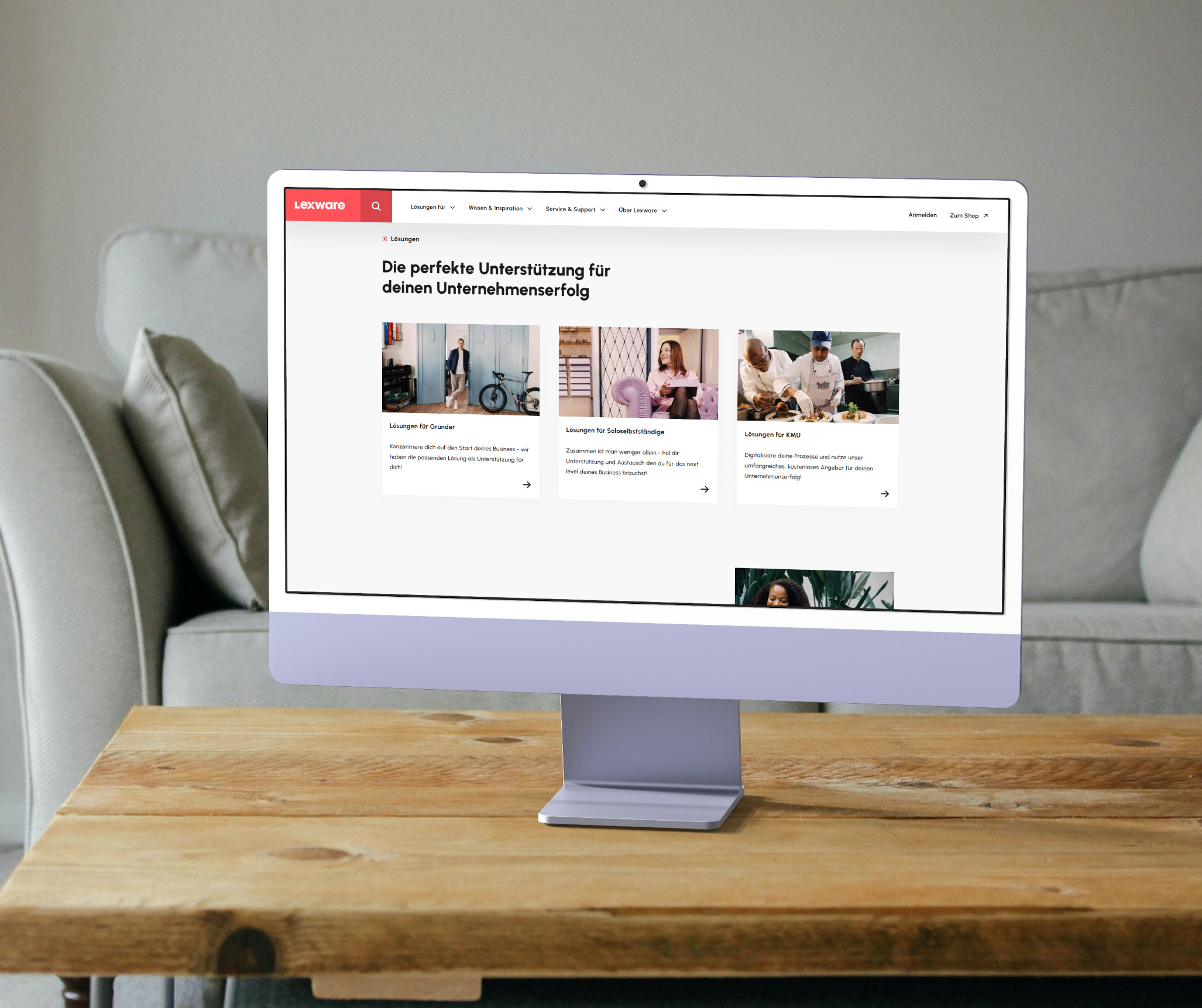
We have been managing Lexware's website for over 12 years and enjoy the trust of our client. During this time, our development team has become a well-coordinated and experienced partner that supports Lexware not only technically but also in an advisory capacity. In the current project, our task was to adapt Lexware's website to its new corporate design. We created a dynamic, fresh web design that appeals to a younger target group in particular and presents the products and services in a modern way. By simplifying the page structure and using a clear design, we are better able to support users in finding the right product. For the redesign of the site, we successfully applied our expertise in TYPO3 and front-end development with HTML, CSS, and Vue.
Design requirements
Dynamic and modern web design
The new design was intended to appear fresher and more dynamic in order to appeal to a younger target group in particular and to present the products and services offered by Lexware in a contemporary way.
Clarity and simplicity for customers
The grown website structure should be simplified to enable user-friendly navigation and better support target groups in their search for relevant content and products.
Consistency for editors
Clearer design guidelines should be created to support editors in creating content and prevent “uncontrolled growth” in the page structure.
Our project approach
- 1
Phase 1: Project initiation
Presentation of the new brand guidelines, design library, and initial drafts by the client and external UX designer. Cataloging of all relevant website components and content modules that need to be taken into account during the rebranding process. Prioritization of components and modules together with the client using a story map. Creation of backlog items for structured implementation.
- 2
Phase 2: Development/Implementation
Processing tickets created in Jira. Continuous coordination with the customer in case of queries and for necessary adjustments. Ongoing detailing and refinement of tickets to ensure precise implementation. Regular review and adjustment of the project timeline based on progress. Finalization and coordination of the go-live scope.
- 3
Phase 3: Acceptance and bug fixing/fine-tuning
This step was carried out in parallel with the ongoing development phase in order to save time and incorporate timely feedback.
- 4
Phase 4: Go Live
Implementation of a content freeze to prevent editorial changes by the customer before launch. Final systematic check of the website. Rollout of the new website.
Interested in a website redesign?
